
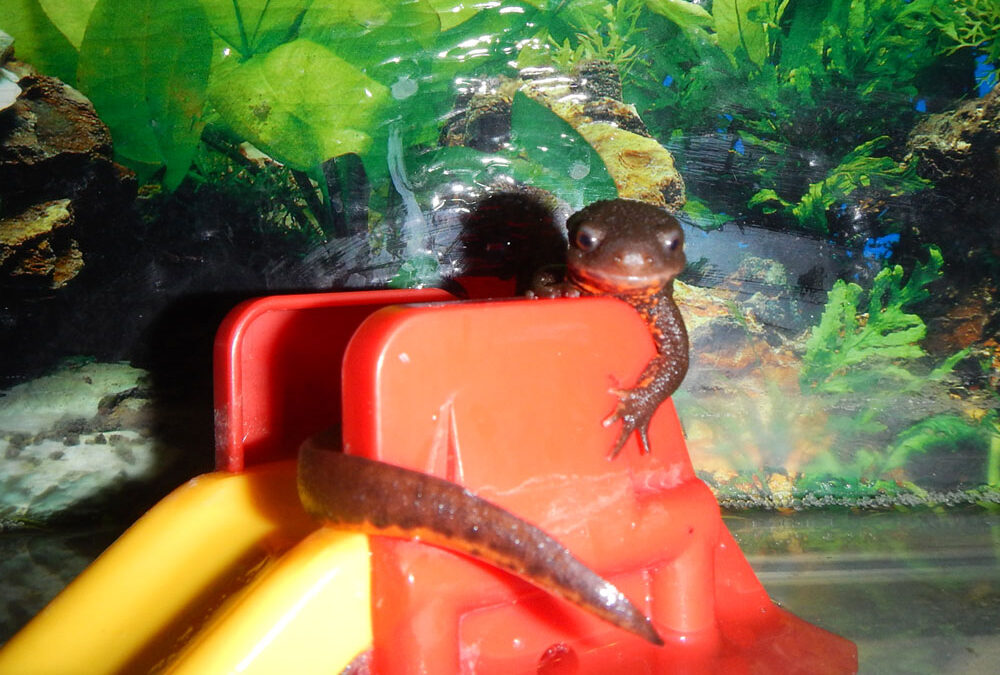
In the lush landscapes of Japan, a small but vibrant creature makes its home in the tranquil waters of ponds and streams. The Japanese Fire Belly Newt, with its strikingly colorful underside and fascinating behaviors, is a creature that captures the imagination.
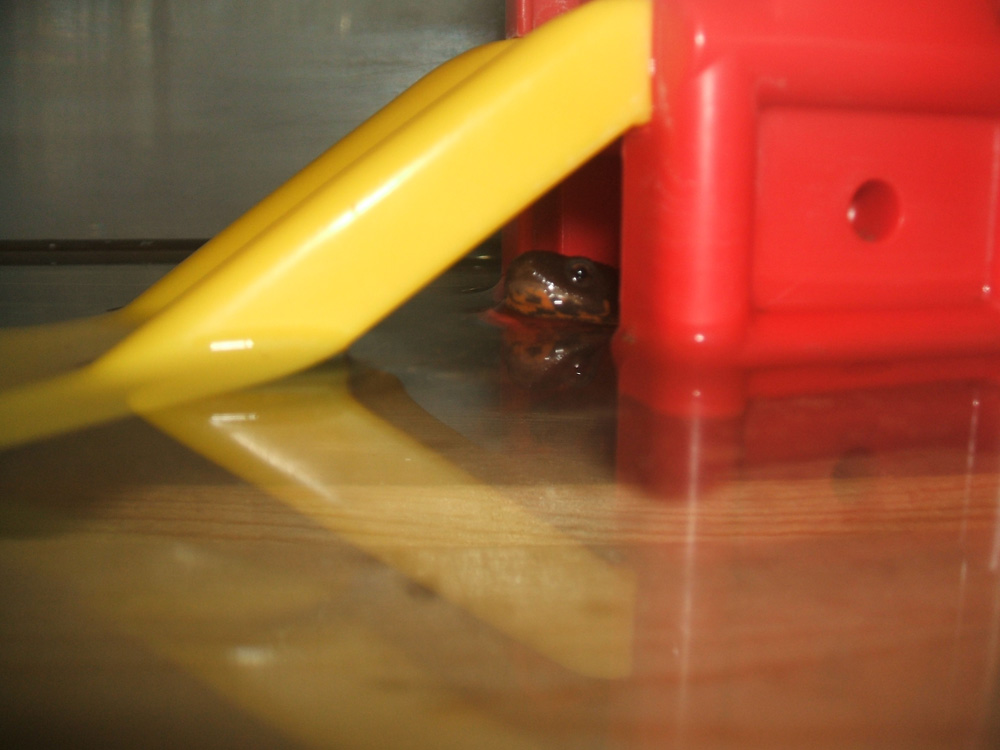
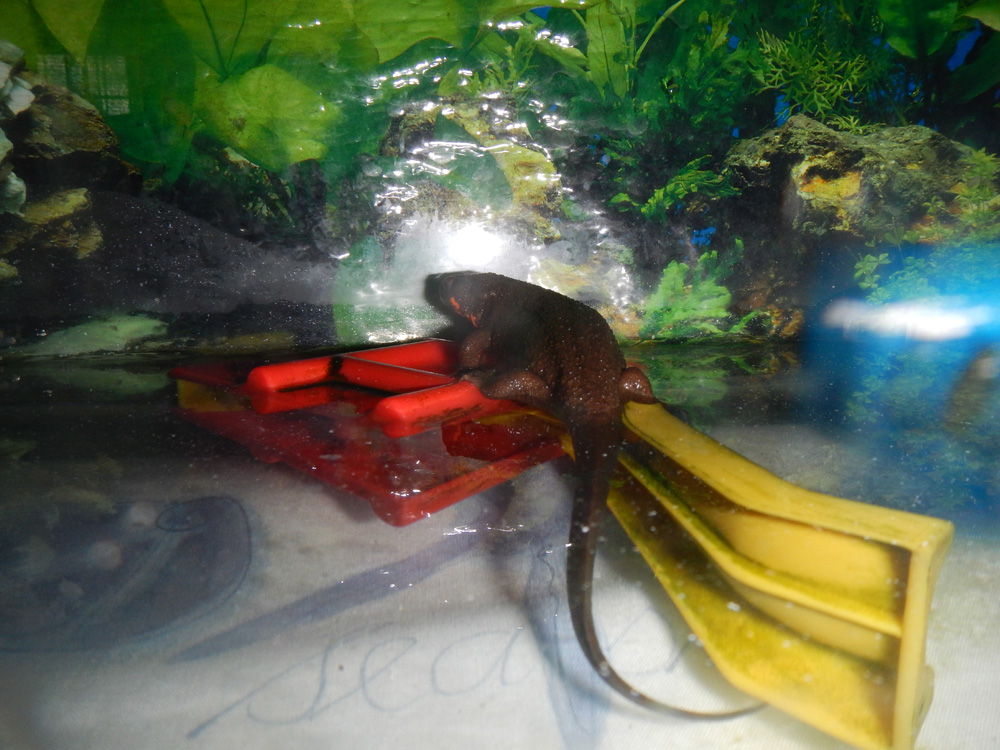
Happy National Pet Day! 25 years ago this month, I adopted my Japanese Fire Belly Newt! I love his adorable little face and his crazy antics ❤ It’s hard to believe that he’s been a part of my life for so long! Their average lifespan is 10-15 years in captivity, but can sometimes live 30+ years with proper care, a testament to their resilience and adaptability. The Japanese Fire Belly Newt is usually 9–14 cm in length. My big guy appears to be around 17 cm!
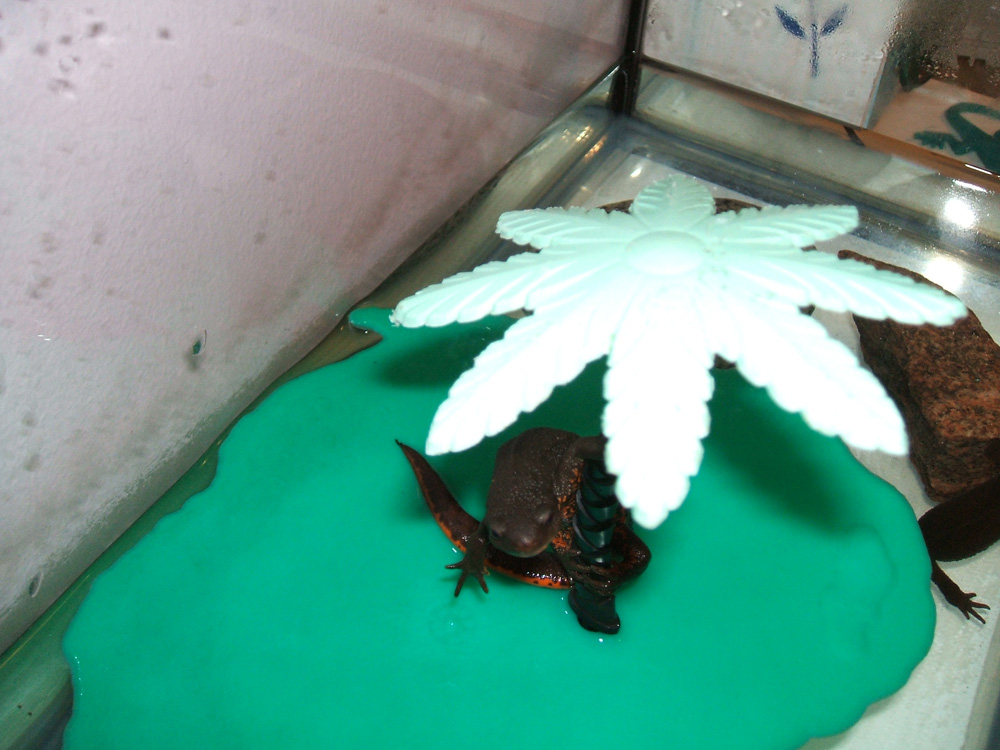
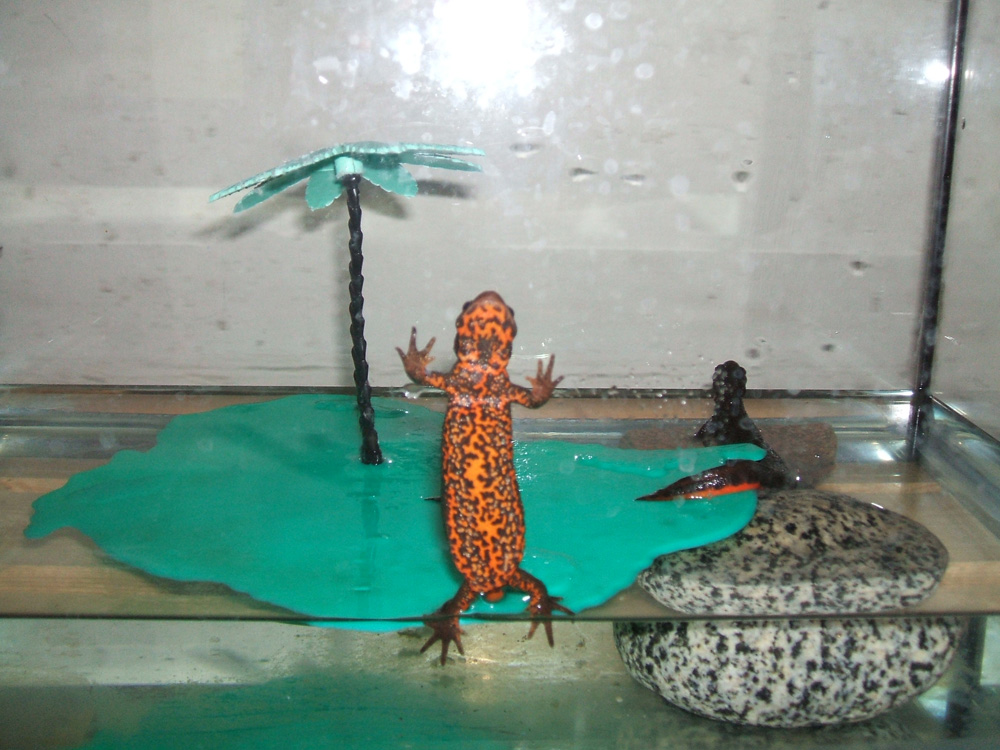
They have rough, pebbly skin that is brown to black in colour. One of the most striking features of the Japanese Fire Belly Newt is its vibrant underbelly, a vivid orange to crimson, usually with a blotched, darker pattern. This colorful display isn’t just for show; it’s a warning of the toxicity that lies within. These newts secrete toxins as a defense mechanism, deterring predators with their lethal potential. However they seem to loose their toxicity when kept in captivity.
Japanese Fire Belly Newts are known for their social behavior. They often live in groups and exhibit a unique courtship display that involves a dance-like interaction between males and females. My second newt didn’t live as long, however my remaining one seems to enjoy the company of humans as well. He often comes up to the glass to greet people, and will sometime become very active, appearing to be showing off!
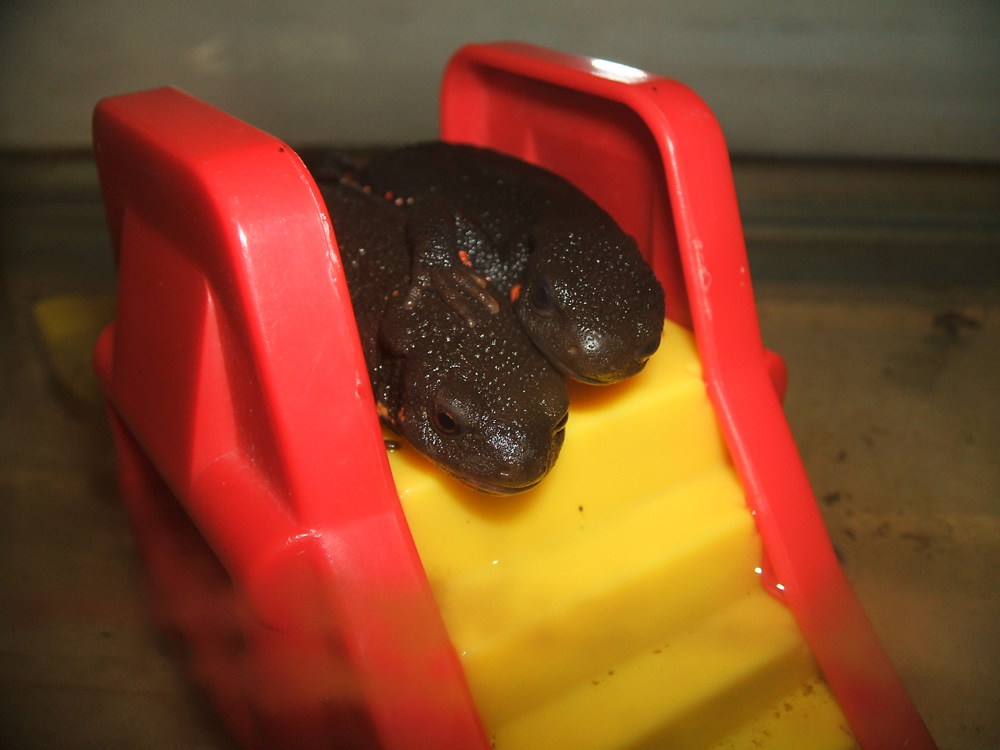
During the breeding season, male Japanese Fire Belly Newts undergo a stunning transformation. They develop a blue iridescent sheen and smoother skin, making them even more eye-catching than usual. Like many of their amphibian cousins, these newts have impressive regenerative abilities. They can regenerate body parts, a trait that has fascinated scientists and nature enthusiasts alike. These newts have a varied diet that includes aquatic invertebrates, small fish, tadpoles, and even some plant matter. This omnivorous diet reflects their adaptability and resourcefulness in the wild.

The Japanese Fire Belly Newt is not just another amphibian; it is a symbol of the delicate balance of nature and the incredible adaptability of life. Whether observed in the wild or cared for in captivity, these newts continue to enchant and educate us about the wonders of the natural world. For more fascinating insights into the life of these extraordinary creatures, you can explore further details and images online: https://animalia.bio/japanese-fire-belly-newt, https://facts.net/nature/animals/11-fire-bellied-newt-facts, https://www.animalspot.net/newt, https://en.wikipedia.org/wiki/Japanese_fire_belly_newt