
Leeks have been grown and eaten since ancient times in Asia, Egypt, Grease, and Rome. Leeks are a great source of fiber and many nutrients, including iron, potassium, and vitamin K, and also have anti-inflammatory properties. My interest in leeks started as a child after seeing the Pokemon called “Farfetch’d”, however I think they referred to the leek it carries as a green onion back then. Leeks are a member of the onion family, but are larger and thicker than green onions, and have a milder flavour. In Japan leeks are used in many traditional dishes. I was inspired to try growing leeks after seeing them featured in a Hatsune Miku music video.
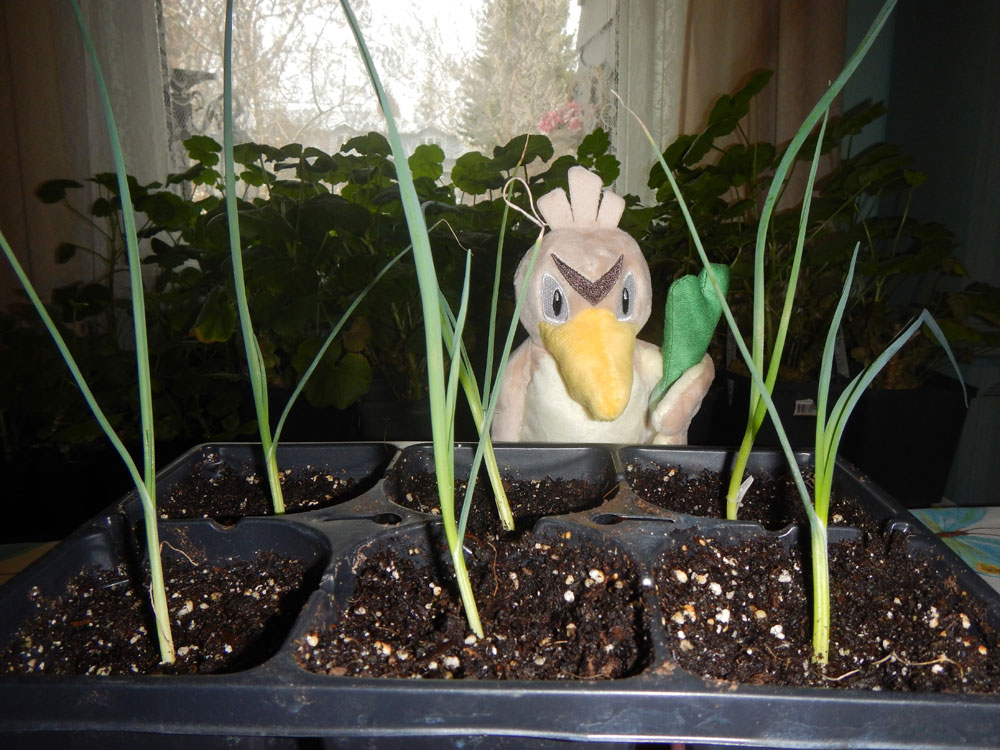
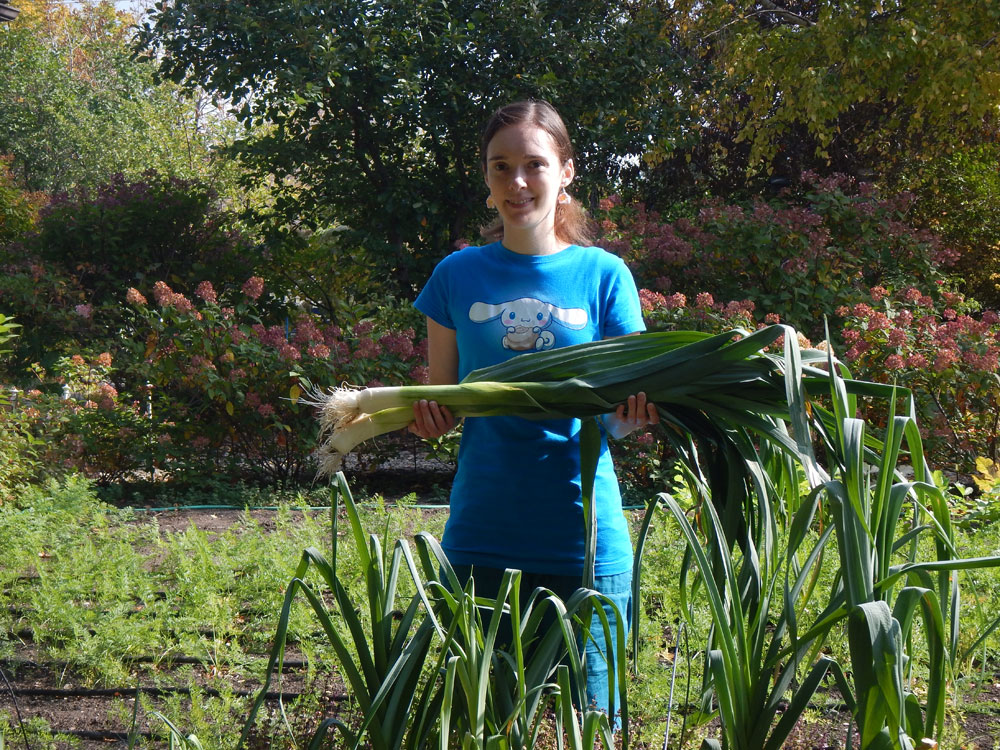
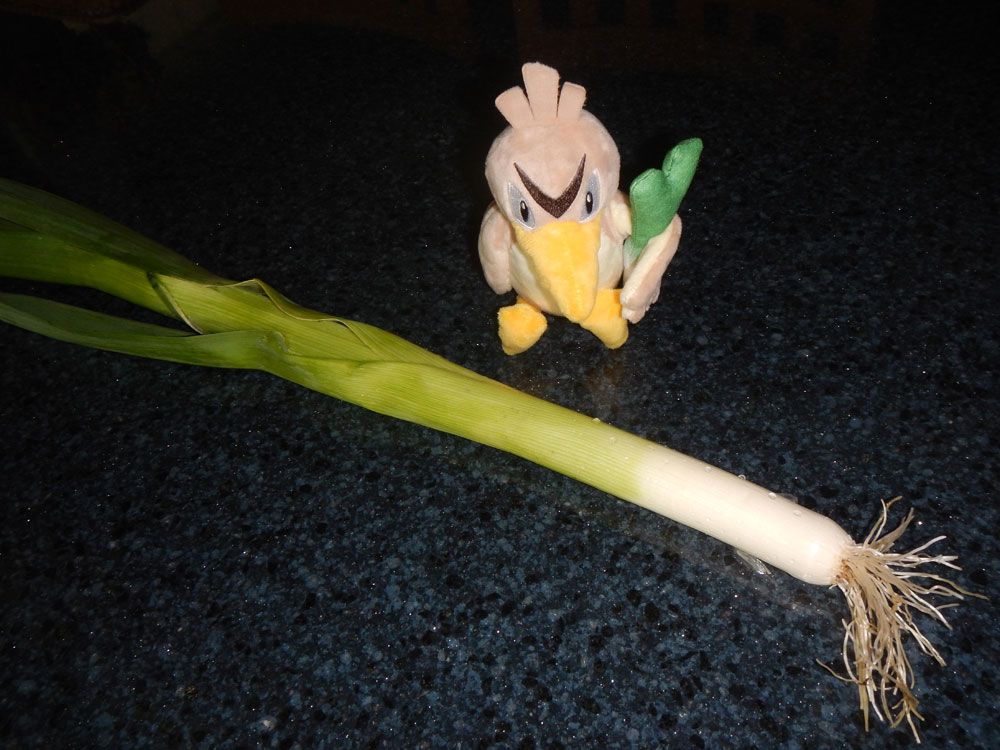
If you live somewhere with a short growing season, like I do, winter is the time to start your leeks if you want them to end up to be a good size. Leek seeds can be planted indoors in pots or trays of potting soil, and placed under a grow light or near a sunny window. Around mid-May, get the leek seedlings used to the outdoors by gradually putting their pots outside during the day for a week or two before transplanting them into a sunny spot in your garden. Using a dibbler tool or the handle of a hand shovel, make holes 8in apart the depth of your tool. Place the seedlings in the holes, making sure the roots reach the bottom. This encourages longer white stems. Instead of filling in the holes with soil, fill them to the top with water and let it soak in. It’s best to let the soil wash in naturally over time to keep it loose making it easier for the leeks to grow. The leeks can be harvested whenever they reach the desired size. They can tolerate light frost, but should be harvested before the ground freezes. If you see a flower bud on your leek, harvest it right away. If the flower opens the leek will taste bitter. You can use leeks for cooking in any way you would use an onion. You can also chop them up and freeze for later.